Americans are different. They eat more. Bad food, good food. Add some cheese please.
Published Good Weekend magazine, March 2012
Americans are different. They eat more. Bad food, good food. Add some cheese please.
“We eat more because we’re bigger than most people and we start out bigger,” explains New Yorker writer Calvin Trillin to an audience of 399 Americans and one Australian at the San Carlos Institute on Key West’s main Duval Street, early last month.
The rest of America was cold and soggy with snow, slush, rain and sleet, but we were snug and smug, talking about food, in the sultry 23 degrees of the country’s southernmost tip, a place where the main-street is basically one long bar and sunset is advertised daily so people can time their first – or third - margarita to it.
Trillin, a small, trim man in his mid-seventies with an intense stare and fierce black hair rimming a bald head, may have been daring his listeners to laugh.
Or not.
This is a man who once wrote that he has been talking about being hungry from the moment he learned to talk. If he could, he would eat Chinese food with a tablespoon. “The last piece of food I left on my plate - that was in the fall of 1958, as I remember – had a bug on it.”
Trillin insists he has friends who make him so nervous around food that he thinks, if he is to get his fair share, he will have to eat with both hands.
A serious news journalist, he gradually began to write about food when The New Yorker sent him on the road for 15 years to turn out regular pieces on Regional America.
He discovered that sometimes, the fastest way to get a bead on a town, was by asking the hotel desk clerk the best place to eat: not the restaurant the clerk would take his in-laws for their 25th anniversary but the place he’d go after 13 months in the army. And so Trillin revealed America in all its complexities, divisions and paradoxes to his readers through the crawfish festival in Breaux Bridge, Louisiana, through country patties in Mississippi.
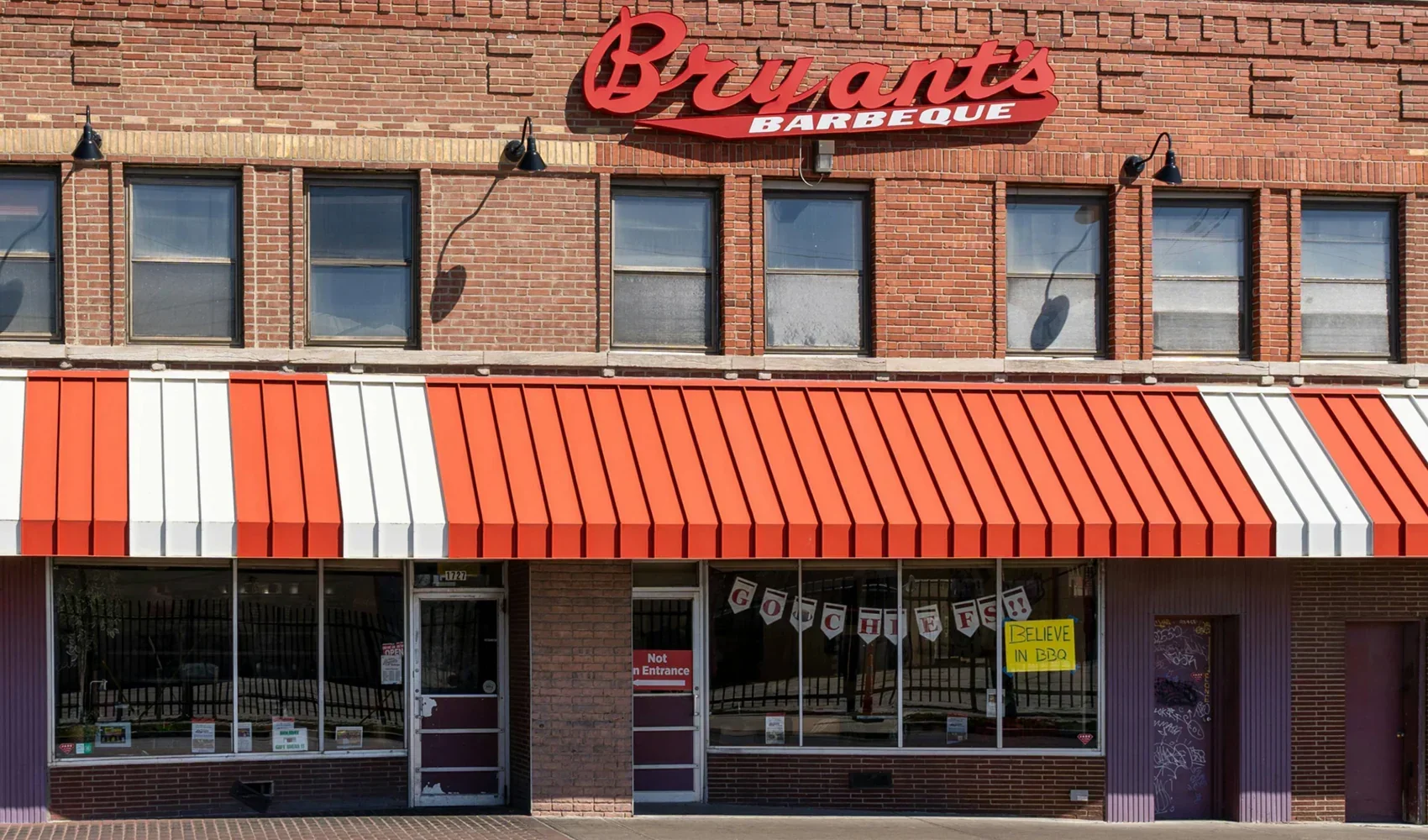
Through friends like Fats Goldberg, the pizza baron who went from 320lbs to 160 but still pines for the days when two chili dogs were an appetizer on the way to lunch; through local cafes like Arthur Bryant’s in Trillin’s hometown of Kansas City which serves barbecued spareribs and beef cooked over a hickory fire, and was the first place in town where Blacks and whites ate together because, according to Trillin who puts it in capital letters, “IT IS THE SINGLE BEST RESTAURANT IN THE WORLD”.
Who knew?
It seems that if you want to unravel a business scandal, you follow the money trail. If you want to understand people, follow the food. The true food writer is not someone who describes what is on the end of your fork and what it will taste like but who discovers why it’s there in the first place.
Who has more fun than such a food-writer? They get to eat a lot and there is almost no subject he or she can’t serve up: taste, décor, celebrity, cooking styles, big business, government policy, eating habits, spending patterns, class differences, race, migration, the rise of tapas; the collapse of cheese cake. As our obsession with food, superstar chefs, hit restaurants, TV cooking shows, bake-offs and cookbooks has grown, so has the food-writer’s territory. Food writing is now as ubiquitous as the iPod. Bloggers photograph their meals in restaurants and post the pictures.
For all that – perhaps because of some of that - it has been a slow grind since the Sixties to get food and food writing on the intellectual menu.
Key West bulges with restaurants, bars and food specialties – conch chowder, key lime pie, pink shrimp – and its most famous citizen was Ernest Hemingway who ate and mostly drank his way around the island on and off from1928 until his death in 1961, and later called his memoir A Moveable Feast.
But when we think of Hemingway, we think of wars, bullfights, death, hunting and steely, spare prose. We don’t think of: “The pommes à l’huile were firm and marinated and the olive oil delicious.”
Two years ago, the organizers of the august Key West Literary Seminar – happy eaters all – looked around at the western world’s unceasing fascination with food and said, oh what the hell. Even The New Yorker was doing an annual food issue.
For 28 years, the seminar, held annually, had devoted itself to fiction, short stories, poetry, theatre with guests like Edmund White, Jan Morris, Paul Auster and Margaret Atwood, but for 2011, food got the guernsey: The Hungry Muse or food in literature.
Invitations went out to Trillin and to a host of chefs turned writers, journalists, foreign correspondents, political reporters, poets, novelists, academics who for various reasons, from curiosity to greed, had settled on food as a way of writing about life.
There was Indian cookbook pioneer Madhur Jaffrey, Mark Kurlansky who wrote Cod, Salt and The Big Oyster, Julia Child’s longtime editor Judith Jones, so diminutive that on stage her white head barely bobbed above the podium; Jonathan Gold, the only food critic to ever win a Pulitzer; Ruth Reichl, whose Garlic and Sapphires described her time in mufti as The New York Times restaurant reviewer who made it okay to take ethnic restaurants seriously; her successor Frank Bruni; Newsweek’s Julia Reed; novelists Diana Abu-Jaber and Bich Minh Nguyen; and chef and Times columnist Molly O’Neill who grew tired of writing “food porn” ten years ago and – shades of Trillin – took to America’s byways and highways to produce a celebration of regional food One Big Table.
And so, 70 plus years after Californian M.F.K. Fisher compiled her first beautifully crafted collection of essays on eating well; almost 60 years after Elizabeth David transformed the English cookbook; 50 years after Judith Jones rescued Julia Child’s manuscript, and 40 years after French chef and author Jacques Pépin found himself laughed out of school at Columbia when he suggested doing his doctorial thesis on the history of French food, this bevy of stellar food-writers happily arrived from the rest of freezing America like a flock of heat-seeking hummingbirds to talk seriously about two passions. Food. Writing.
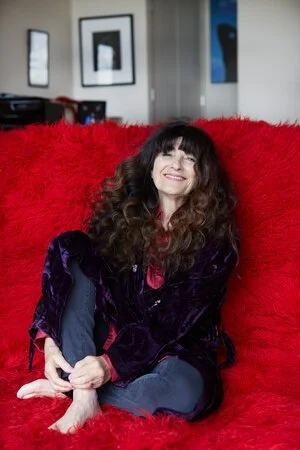
Reichl, whose c.v. includes restaurant reviewing for The Los Angeles Times as well as The New York Times, five books, and ten years as the last editor-in-chief of Gourmet, read the first piece of food writing she’d ever loved:
“When you wake up in the morning, Pooh,” said Piglet at last, what’s the first thing you say to yourself?”
“What’s for breakfast?” said Pooh. “What do you say Piglet?”
“I say, I wonder what’s going to happen exciting today,” said Piglet.
Pooh nodded thoughtfully. “It’s the same thing,” he said.
BREAK
Early last year, Patrick Symmes whose beat is Latin America, went to Cuba, on assignment for Harper’s, to live on the monthly average wage of $US20. In the process he discovered that the citizens have had ration cards that keep them just above starvation level since 1962, and it is effectively illegal to grow carrots in your backyard because – say the authorities - it would create disparities and then dissent.
Who knew.
Symmes explains in some wonderment, “I can’t deny, food often seems to explain a country to me better than even a detailed study of the history and politics.”
Jaffrey went to South Africa and learned that Nelson Mandela’s favourite dish was boiled corn and beans and that when he was imprisoned on Robben Island, he and other prisoners had to dive for lobsters. Butt naked. “And” Jaffrey points out with a grimace, “they were the worst lobsters; the ones that pinch!”
Almost any human experience or emotion can be expressed in terms of food.
Once, two spoons in bed
Now tined forks
Across a granite table
And the knives they have hired.
Divorce – Billy Collins, 2008
Or, as Roy Blount Jnr puts it:
Okra's green,
Goes down with ease.
Forget cuisine
Say "Okra, please."
You can have strip pokra,
Give me a nice girl and a dish of okra.
And almost any question can be asked, and was.
Why do Americans so love the formula “all you can eat”? (For answer, see Trillin above.)
How do men in Rome stay slim? (They eat small portions, claims Bruni whose new food memoir Born Round chronicles how a fat young Italian-American child used to family lunches that began at 10am turned into a snake-hipped, food-happy journalist.)
And the best of all – from Blount - which no-one ever tried to answer: “How can a chicken eat all the time and never get fat in the face?”
Here is one food writer’s small story that tells you almost everything about the food industry advances of the late 20th and early 21st centuries.
David Masumoto, a third-generation farmer turned writer with a Japanese-American heritage, runs the peach farm where he was raised, just south of Fresno in California. He does his best to produce sweet, succulent peaches. High-end restaurants and hoity-toity fresh food markets can’t get enough of them. But Masumoto is driven by one motive: in this age of carefully cultured, long-life, transported food that tastes of nothing so much as commodification, he wants future generations to remember what a great peach tastes like.
“Who’s going to demand a peach they’ve never had?” he asks simply. The prospect scares him. And now he writes about it; six books in and more to come.
“I don’t think any of us write about food specifically,” drawls Julia Reed in a southern accent as seductive as fried peach pie. “Even now when I write about food, it’s an excuse to write about something else.”
“We forget how important food is: it’s a prism, a metaphor, for everything we do,” says chef turned writer Molly O’Neill.
***
But still there is angst.
Trillin’s 54-year old colleague at The New Yorker, Adam Gopnik explained the dilemma of being in the first generation of a number of younger men writing about food. “It’s a complicated gender role and that’s why you get this hyper-testosterone thing,” he says. “ You know, ‘But I only write about sausages made from rattlesnakes. I’m not one of those food writers who writes about cakes and sauces …’ “
O’Neill, tall, majestic, a woman who won her cooking chops when restaurant kitchens were still blue-collar, shucking oysters alongside male line cooks who were teamsters in the off-season, responds tartly: “A lot of the [food] writing now being done by white, highly privileged, well paid men was being written by women 20 years ago but now it’s being spun with muscle and given legitimacy and an intellectual veneer.
“Forty years ago, Frances Moore Lappé wrote Diet For A Small Planet. She used to drive around in an old jalopy, trying to get people to eat arugula, dandelion leaves and no meat. A lot of people are now on that platform” – she means writers like Michael Pollan(In Defence of Food, The Omnivore’s Dilemma) – “and they get $50,000 for one speaking engagement. She wouldn’t have seen that in one year in her life.”
Then there’s M.F.K. Fisher. Publisher Jason Epstein, who also co-founded The New York Review of Books - there’s writing gravitas for you - gruffed about food-writing being taken seriously. White-haired, as roly-poly as a marshmallow and about as cuddly as a cat-fish after 60 years of dealing with the publishing fraternity, he extolled Fisher, the first great food writer of modern times, arguing, “She belongs in the pantheon along with Hemingway but she was classified as a cooking writer and that disqualifies her from serious attention. The people who make these decisions can’t believe that someone who cooks can write! Henry James wouldn’t have known how to cook an egg!”
Judith Jones, now in her mid-eighties and still a vice-president at Knopf where she has edited John Updike, Anne Tyler and William Maxwell as well as many of the key culinary names of the last 50 years – Child, Jaffrey, Claudia Roden, Marcella Hazan, James Beard - grew up in a house where to talk about food or to say “yum-yum” was to be faintly disgusting. “We waved the cooking smells away,” she says, gesturing. She disappeared to Paris, just after World War II, returning over three years later, transformed.
It was she who rescued Julia Child’s manuscript in 1960 when the “boys in Boston” – [Houghton Mifflin] - who had first option, rejected it. “No American woman wants to know that much about French cooking,” they pronounced. “But I did,” says Jones, by then working for Knopf, “and I thought there must be hundreds and thousands of women like me out there and there were.”
Choosing a title was difficult. Jones was in New York; Child in Europe. Finally Jones came up with Mastering the Art of French Cooking.
Child wrote enthusiastically, “I love the gerund!”
Publishing boss Alfred Knopf didn’t, declaring, “If a book with a title like that sells, I’ll eat my hat.”
The book has never been out of print since and, to Jones’s delight, sales have quadrupled since the release of the film Julie and Julia in 2009. “Julie’s books have gone down,” she says happily, loyal to the last to Child who was mightily upset by blogger Julie Powell whose fame grew with every recipe she cooked from the first volume of Mastering.
All those four-letter words, explains Jones.
“Julia was so upset by that blog,” recalls O’Neill. “She’d say” – putting on Child’s tones with their swooping high notes and lavish drama, “‘Don’t I have any rights. Or rather, should I say, ‘don’t I have any goddamned rights?!!!!!’ ”
Child, says Jones (who incidentally also saved Anne Frank’s diary from American publishing’s reject pile), changed the language of food writing. “Recipes then were nasty short things. Julia’s language was visceral. She would ‘plop’ something in a bowl; ‘massage’ something or ‘slap’ it on the counter. It wasn’t about ‘combining’ something,” says Jones with as much of a sneer as someone so polite and precise can bring herself to express. “Julia would say, ‘go ahead and enjoy it. Rub the little chicken’s breast with butter – he likes it. If you make a mistake, never mind.’
“Julia would say to me, ‘Joooodith! We were born at the right time!’ ”
***
It’s moot what the current time is.
There are food writing opportunities galore and plenty of competition for them. On the other hand, publishers want more pictures, far fewer words. “Three recipes to a page,” Jaffrey says with disgust. Hold the chat.
Outside the San Carlos Institute building, its comforting gloom and spotlit speakers, lurks the great hulking curse of American convenience food, factory farmed, processed, pumped with preservatives, served in gigantic proportions, almost everywhere you look, and not just there in Key West, or the rest of the United States, but increasingly, everywhere.
We are the only animals which cook their food but, remarks Reichl, “it’s ironic that just as people stopped cooking, they started reading cookbooks. Research shows that the average person uses just two recipes from each cookbook. We’re a nation that continues to love reading about cooking but is unwilling to spend our precious time cooking.”
Then again, Reichl only started cooking in self-defence because her mother, Miriam, who the adult Reichl later discovered was bi-polar, was so aggressively uninterested. Miriam specialized in saving money at the expense of what went on the Reichl’s dinner-table and was nicknamed the Queen of Mould.
One bright morning, Miriam asked Ruth’s father to sample something on a spoon. Obediently, he tasted it and then ran to rinse out his mouth, drinking straight from the coffee pot spout. “It was the worst thing he had ever had in his mouth. The first time he said that it tasted like cat toes and rotted barley. Then as pigs’ snouts and mud and five years later he had refined the flavour into a mixture of antique anchovies and mouldy chocolate,” Reichl says quoting her memoir, Tender At The Bone. “My mother said, ‘Just as I thought, spoiled.’”
But without the Queen of Mould, Reichl may never have become a food writer.
And Tender At The Bone which so flummoxed booksellers when it came out 12 years ago they had no idea where to shelve it – “all those words” Reichl remembers – started an avalanche of food memoirs so that now, Reichl adds, they are being published in their thousands. Novels and mysteries too, all based around food. Reichl is working on a novel of her own, Delicious.
Humans are endlessly resourceful and food is fundamental to us. “You can understand almost anything about a society by looking at what they’re eating,” she remarks.
Or as novelist Kate Christensen put it, “Our relationship to food is revealing of our character in a way that nothing else is.”
There’s always one more lunch, one more dinner and as O’Neill so aptly writes, “Every meal, after all, is a new beginning.”
Or you could say, as someone once advised Trillin as he happily settled in for a multi-course clambake, “You have to pace yourself.”
***